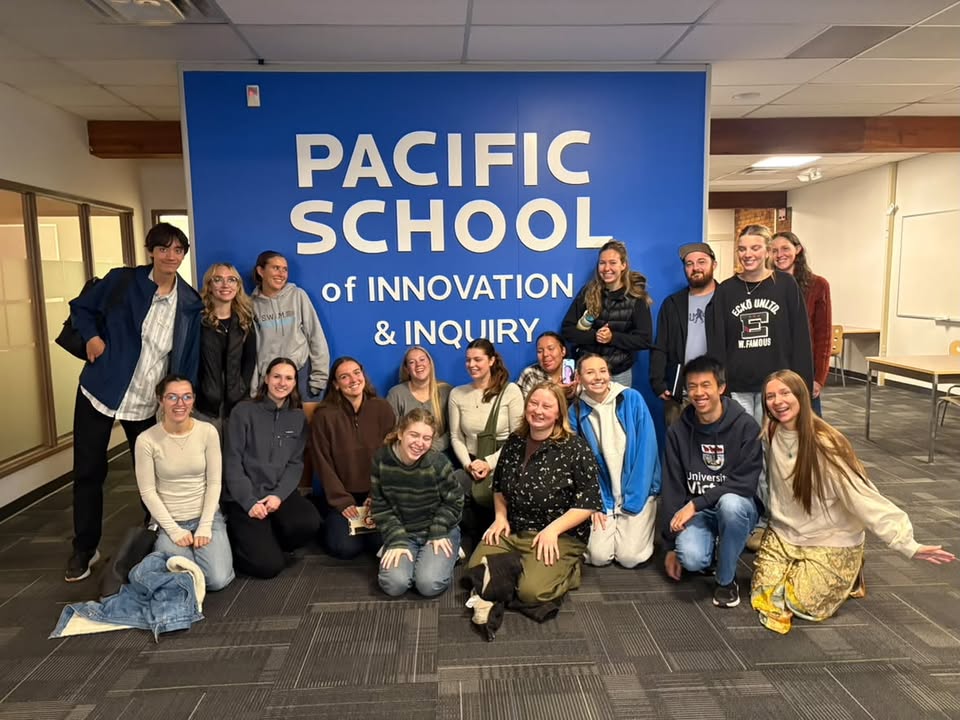
Today, instead of doing our regular Zoom session, we had the opportunity to tour the Pacific School of Innovation and Inquiry in downtown Victoria, and it was such an amazing experience.
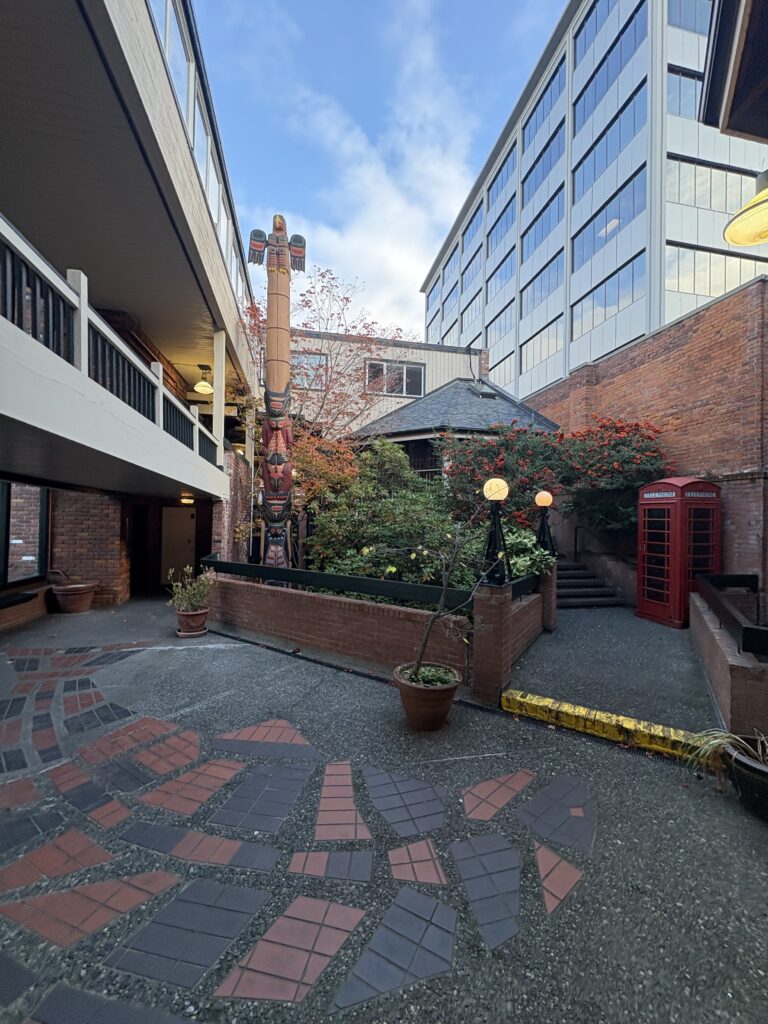
First of all, the school itself was beautiful. It is located right in downtown Victoria and has two floors that connect through an outdoor staircase. The space felt very unique and creative, and I could see how the environment could encourage students to think differently and explore their own interests.
I think the school has so much to offer when it comes to allowing students to be creative and innovative in their own learning. One of the things that stood out to me the most was how different the school’s approach to assessment is. Students do not receive traditional grades in the way we are used to, and there are no written exams or regular tests. Instead, their learning is demonstrated through what the school calls “proof of learning.” Students show what they know through conversations, projects, and other forms of evidence rather than simply receiving a score on a test.
We also learned that students have a lot of choice and independence throughout the day. They can prioritize what they are working on and decide which areas of learning they feel ready to focus on. This gives students more responsibility for their own education and allows them to learn in ways that work best for them.
Something else that really interested me was how this type of learning environment can be especially beneficial for students who may struggle in a traditional school setting, including some students on the autism spectrum. Because the school takes a more individualized approach to learning, students can learn in ways that better suit their needs, strengths, interests, and learning styles. Rather than expecting every student to learn in exactly the same way, the school gives students more flexibility and control over their education.
Even though the school has such a different approach to education, students still graduate with a high school diploma. Instead of constantly receiving traditional grades, students work toward completing the learning outcomes required by the BC curriculum. When a teacher feels that a student has demonstrated enough learning in a particular area, they assess the student based on the curriculum and determine what grade they have earned.
Another part of the visit that I found really interesting was the school’s approach to AI and cheating. Because the school has such a different style of learning, students do not seem to have the same motivation to cheat or rely heavily on AI to complete their work. In a traditional school setting, students can sometimes feel pressure to get a good grade, which may lead them to use AI to complete assignments or find ways around assessments. At this school however, the focus is much more on actually demonstrating and understanding what you have learned.
Overall, I found our visit to Pacific School of Innovation and Inquiry really interesting because it challenged the traditional idea of what school and learning have to look like. It showed me that students can still meet curriculum requirements and graduate with a high school diploma while having much more freedom, creativity, and ownership over their education. I especially liked how the school’s approach to assessment naturally encourages students to take responsibility for their own learning and makes cheating or misusing AI less useful. The visit made me think about how education may need to change as technology like AI becomes a bigger part of our lives, and how sometimes changing the way we assess learning may be more effective than simply trying to prevent students from using new technology.